Nobody Expects the Spanish Inquisition!
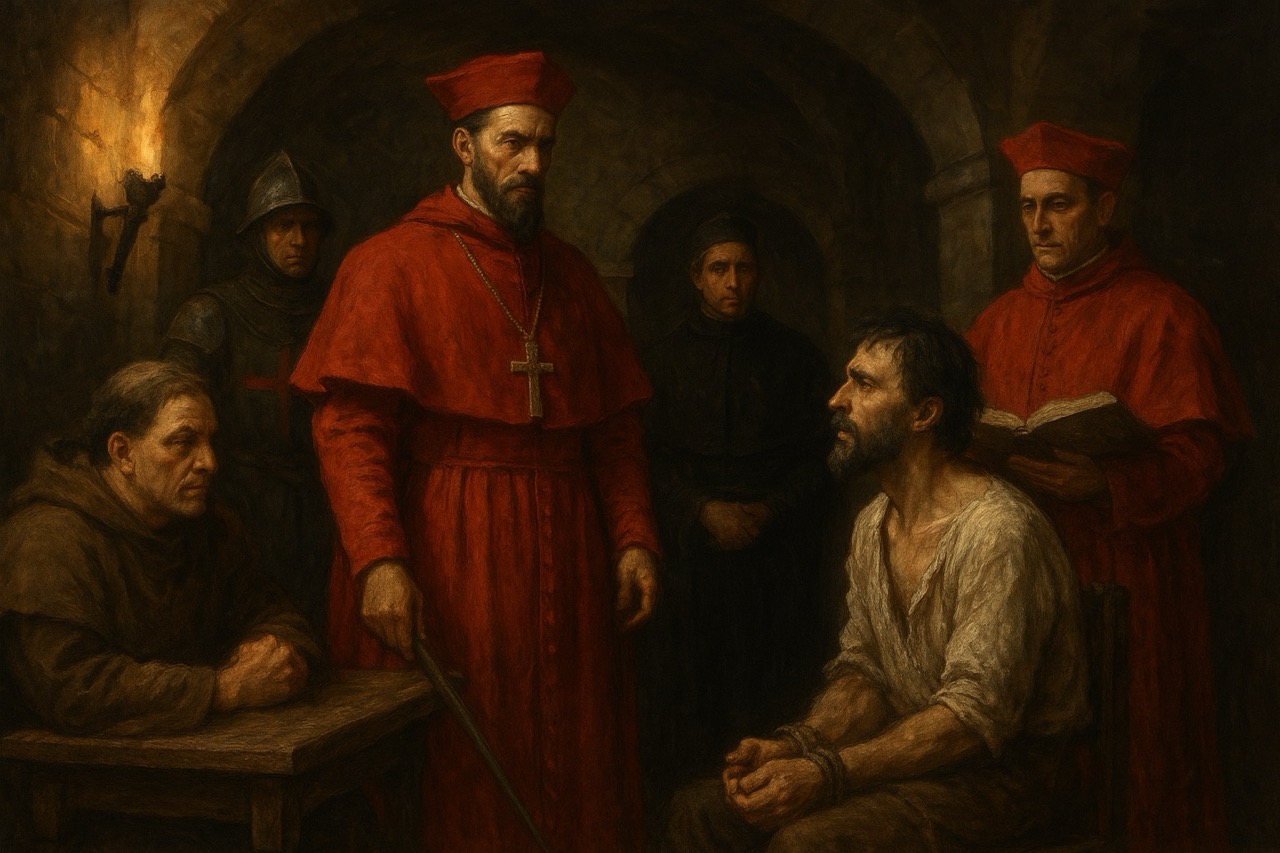
In the old world, beginning in the early centuries—and continuing well into modern times—many religious groups that lacked government sanction were persecuted. Their churches and homes were burned, and they were beaten, stoned, tortured, imprisoned, and sometimes even burned at the stake. Seeking refuge from these persecutions, many of these groups came to the New World. Among them were the early Unitarians and Universalists.
Unitarian Universalism (UU) is a liberal religious tradition rooted in two distinct movements—Unitarianism and Universalism—that both emerged in Europe and later took deep root in the United States. Though separate for centuries, their shared values and theological openness eventually brought them together.
Early Origins
-
Unitarianism dates back to the 1500s during the Protestant Reformation. Early Unitarians rejected the doctrine of the Trinity, emphasizing the unity of God and the moral teachings of Jesus. Influential early centers of Unitarian thought emerged in Transylvania, Poland, and later England.
-
Universalism arose in the 1700s, teaching that a loving God would not condemn anyone to eternal damnation and that universal salvation was available to all people.
Development in the United States
-
American Unitarianism gained momentum in the early 1800s, especially in New England, where leaders such as William Ellery Channing emphasized reason, conscience, and a human-centered approach to faith.
-
American Universalism, led by figures like Hosea Ballou, flourished around the same time, offering a hopeful, inclusive theology centered on divine love and compassion.
Though the two denominations had different theological emphases, both:
-
valued reason and personal experience
-
embraced religious freedom
-
rejected fear-based theology
-
emphasized ethical living and social reform

The 1961 Merger
By the mid-20th century, the two traditions found themselves increasingly aligned—socially, theologically, and institutionally. In 1961, they united to form the Unitarian Universalist Association (UUA). This merger created a broader, non-creedal religious movement committed to pluralism, justice, and spiritual exploration.
Contemporary Unitarian Universalism
Today, Unitarian Universalism is:
-
non-creedal, allowing individuals to draw from many sources—Christianity, humanism, earth-centered traditions, Judaism, Buddhism, and more.
-
values-based, organized around shared principles including the worth and dignity of every person, the search for truth and meaning, democratic process, and respect for the interdependent web of existence.
-
activist-oriented, with a strong focus on social justice, LGBTQ+ inclusion, racial equity, climate justice, and community care.
In practice, Unitarian Universalism brings together people of many backgrounds to create a welcoming, thoughtful, and compassionate religious community—one that encourages each person’s spiritual journey while working collectively toward a more just and loving world.
To learn more about the history of Unitarian Universalism, please see the pamphlet, “Unitarian Universalist Origins: Our Historic Faith.”
Famous Unitarian Universalists
Arts
Education
| Lant Carpenter | Ezra Cornell | Charles W. Eliot |
| Thomas H. Eliot | Horace Mann | Mary Tyler Peabody Mann |
| Randy Pausch | Elizabeth Peabody | Leland Stanford |
| George D. Stoddard |