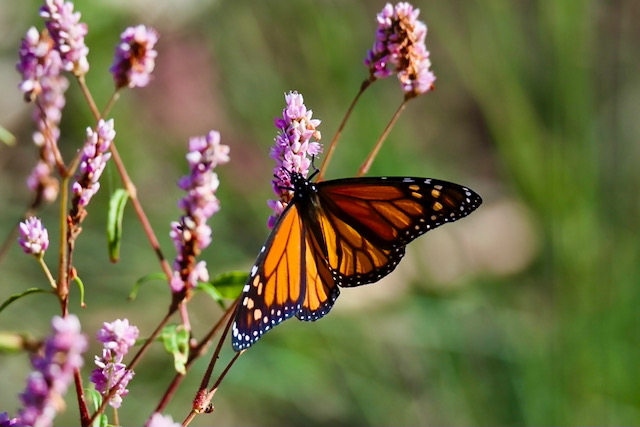
In the spring of 2018, the congregation of Red River Unitarian Universalist Church voted to establish a habitat for Monarch butterflies and other pollinators on the church grounds. They chose to create an official Monarch Waystation—a program of the nonprofit Monarch Watch. These waystations provide essential resources that support Monarch reproduction across multiple generations and help sustain their remarkable long-distance migration.
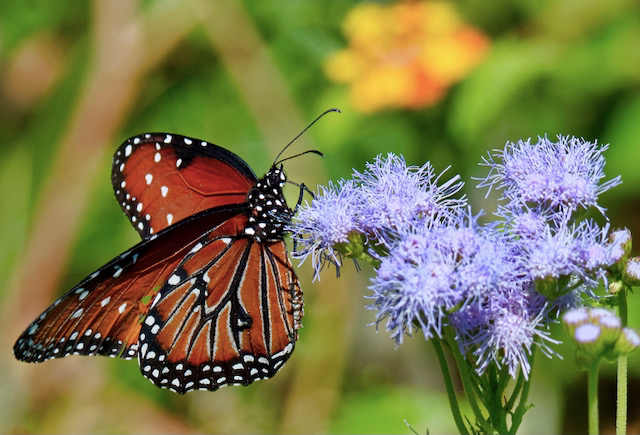
A detailed site plan was created by the Building and Grounds Team Leader in collaboration with the Monarch Waystation Project Leader, making use of the existing flower beds around the church and near the Memorial Garden. Forty native Texas prairie plants were selected, including three species of milkweed—the essential host plant for Monarch caterpillars. These plants, purchased or donated from members’ gardens, were installed throughout the designated areas. Chosen nectar plants provide continuous bloom from early spring through summer to sustain the Monarchs’ northward, multi-generation migration. Fall-blooming species then offer the vital fuel needed for the remarkable 2,000-plus-mile journey of the “super generation” to the Oyamel fir forests of Mexico. The central flyway passes directly through southern Oklahoma and North Central Texas in mid-October, when abundant fall nectar is crucial for Monarch survival.
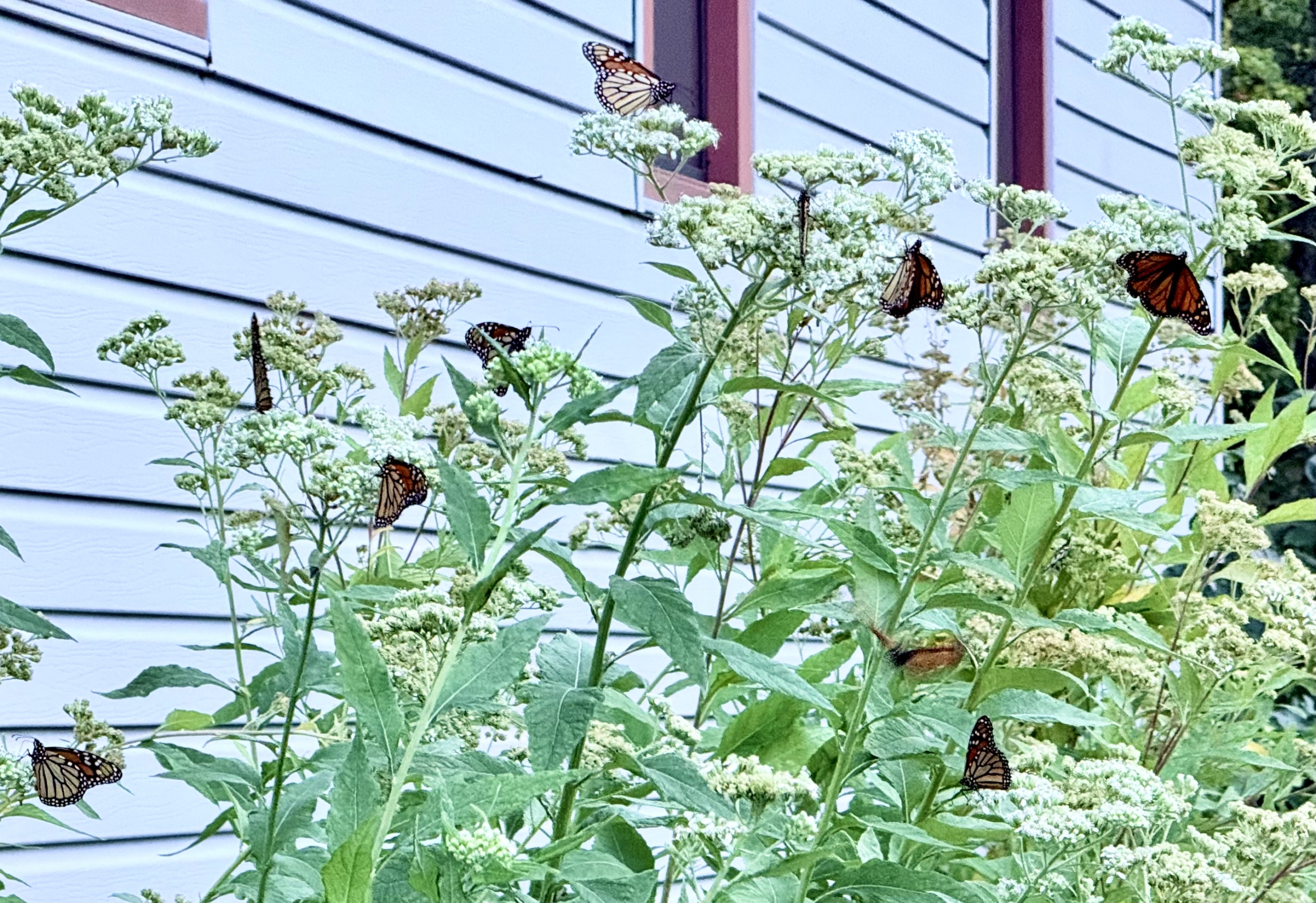
The church’s Monarch Waystation surpasses Monarch Watch’s minimum standards and is officially certified and registered. An all-weather sign, currently displayed in the church foyer, recognizes this achievement and reflects the congregation’s commitment to supporting this near-endangered species and encouraging ecological gardening practices.
The creation of habitat for the Monarch butterfly and other pollinators on the church grounds was voted as a congregational goal of Red River Unitarian Universalist Church at the Spring 2018 Congregational Meeting. The specific project, known as a Monarch Waystation, a program of the nonprofit cooperative Monarch Watch, was chosen. Monarch Waystations are places that provide resources necessary for Monarchs to produce successive generations and sustain their migration. A site plan was drawn up for the church, by the Building and Grounds team leader and the leader of the Monarch Waystation project, which utilized planting space in existing flower beds around the building and near the church’s Memorial Garden. Forty native Texas prairie plants, including 3 varieties of milkweed, which serves as a host plant to the species, were selected, purchased or procured by donation from members’ own garden, and planted. Some of the nectar plants selected have varying bloom times from early spring to summer in order to support the Monarch’s annual journey north over several generations. The fall blooming nectar plants selected support the amazing 2000+ mile migration of a “super” Monarch generation that flies south to the few remaining Oyamel fir forests of Mex- ico where it overwinters in its adult form. This migration is on the continent’s central flyway which passes through southern Oklahoma and North Central Texas in mid October. Fall nectar sources must be abundant to meet the Monarch’s energy requirements for this amazing feat.
Our Monarch Waystation exceeds the minimum requirements of Monarch Watch to be an official certified, registered Monarch Waystation. We have received this recognition. We have an all-weather sign which is currently displayed in the foyer of the church to show our commitment to helping this near endangered species and to promoting gardening practices that support the fauna of the ecosystem of which we are a part.
If you want to know more about Monarchs and Monarch Waystations, go to Monarch Watch.