
Archives

Stages of Faith or Spiritual Development

Download The Morning Program here  or read it below without downloading

Stages of Faith or Spiritual Development
The Rev. Walter Norris, leading

In 1981, James Fowler, a Methodist Theologian at Emory University, developed the idea of a developmental process of human faith or spirituality.  We will consider the different stages that endure throughout a person’s individual life.  An example of one of these stages is the last or sixth stage, Universalizing Faith.  It is the stage that many never reach.  Dr. Martin Luther King, Jr and Mahatmas Gandhi are those who have reached this phase.  It is a phase that considers all people important.  They strive to create social justice in the world.

INTRODUCING OUR GUEST MINISTER

I am a former Southern Baptist.  I have a BA and a MDiv from Southern Baptist Theological Seminary.  I rejected Baptist views and am a retired social worker in mental health issues.  I am passionate about civil and human rights.  Currently I am a docent educator with the Dallas Holocaust and Human Rights Museum.

I took a sharp left turn from my religious training and left evangelicalism.  I am very interested with oriental traditions and like to focus on a spiritual life rather than a religious one.

Walter and Susie Norris joined our congregation in August 2022.


TMP 10-02 - v2

Peace Sunday #3: Living Peace

Download the Morning Program HERE

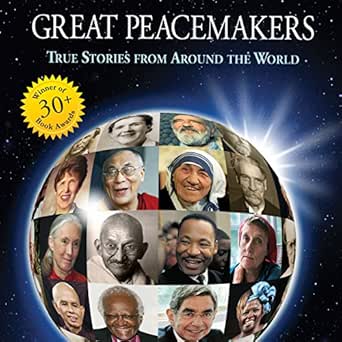
This morning for our third Peace Sunday we continue this special series based on the book Great Peacemakers: True Stories from Around the World by Ken Beller and Heather Chase by taking a look at leaders who ‘live peace’:  Mother Theresa and Thich Nhat Hanh, two well-known individuals.  Their lives stand out for peace in our current situation and learning more about them can be inspiring.

“Peace-building in a War Torn World”

Download The Morning Program here or read it below w/o downloading.

Of his morning discourse, Mark writes:

Each generation seems to find ways to perpetuate war in our world, leading us to wonder if true peace will ever be possible. In this discourse, I will explore the factors and conditions that might bring us to an experience of a more peaceful and just world. What will it take to move in the direction of perpetual peace rather than perpetual war?

ABOUT OUR VISITING MINISTER:
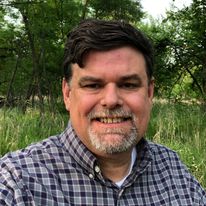
Rev. Dr. Mark Y. A. Davies is the Wimberly Professor of Social and Ecological Ethics, Director of the World House Institute for Social and Ecological Responsibility, and Executive Director of the Leadership. Education, and Development (LEaD) Hub North United States for the General Board of Higher Education and Ministry (GBHEM) at Oklahoma City University where he has worked in both teaching and administration for 25 years. He is an ordained elder in the Oklahoma Conference of the United Methodist Church where he has served as Chair of the Board of Church and Society from 2015 to 2018.

Mark’s Ph.D. is from Boston University in the area of Social Ethics, and he has served Boston University School of Theology (BUSTH) as a member of its Dean’s Advisory Board and as the alumnus representative on BUSTH’s Green Team as part of the Green Seminary Initiative.

Mark has led and implemented a number of initiatives in coordination with the Division of Higher Education of the United Methodist Church including a Methodist Higher Education Global Ethics Initiative from 2008 to 2012, a United Methodist Higher Education Interfaith Initiative from 2015 to present, and a Global Methodist Higher Education Social and Ecological Responsibility Initiative from December 2016 to the present. Mark has published in the areas of Boston personalism, process philosophy and ethics, and ecological ethics.

In 2017, the General Board of Church and Society of the United Methodist Church selected Dr. Davies to serve as the convener of the writing team tasked with revising “The Natural World” section of the Social Principles of the United Methodist Church. This is the first time the Social Principles have undergone a thorough revision since their adoption by the denomination in 1972.

Mark is one of the inaugural members of the New Room Books Editorial Board. New Room Books is a reviewed academic monograph series that offers scholars from the Methodist tradition and their students a way to share their work.

Since 2015, Mark has served on the United Methodist University Senate, which is “an elected body of professionals in higher education created by the General Conference to determine which schools, colleges, universities, and theological schools meet the criteria for listing as institutions affiliated with The United Methodist Church.”

Mark engages in advocacy and activism in the areas of peace, social justice, and ecological sustainability. Locally this is expressed through his work with the Human Community Network, which works to create non-violent systemic change for a just and flourishing human and ecological community through collaboration, education, innovation, and action. See www.humancommunitynetwork.org.

He and his wife Kristin live in Edmond, OK in the United States, and they have two daughters who attend Oklahoma City University.
TMP 09-25 - v4

Nine Eleven: The Noun

Download the morning program here or read it without downloading below.

Nine Eleven: The Noun

The Worship Team, leading

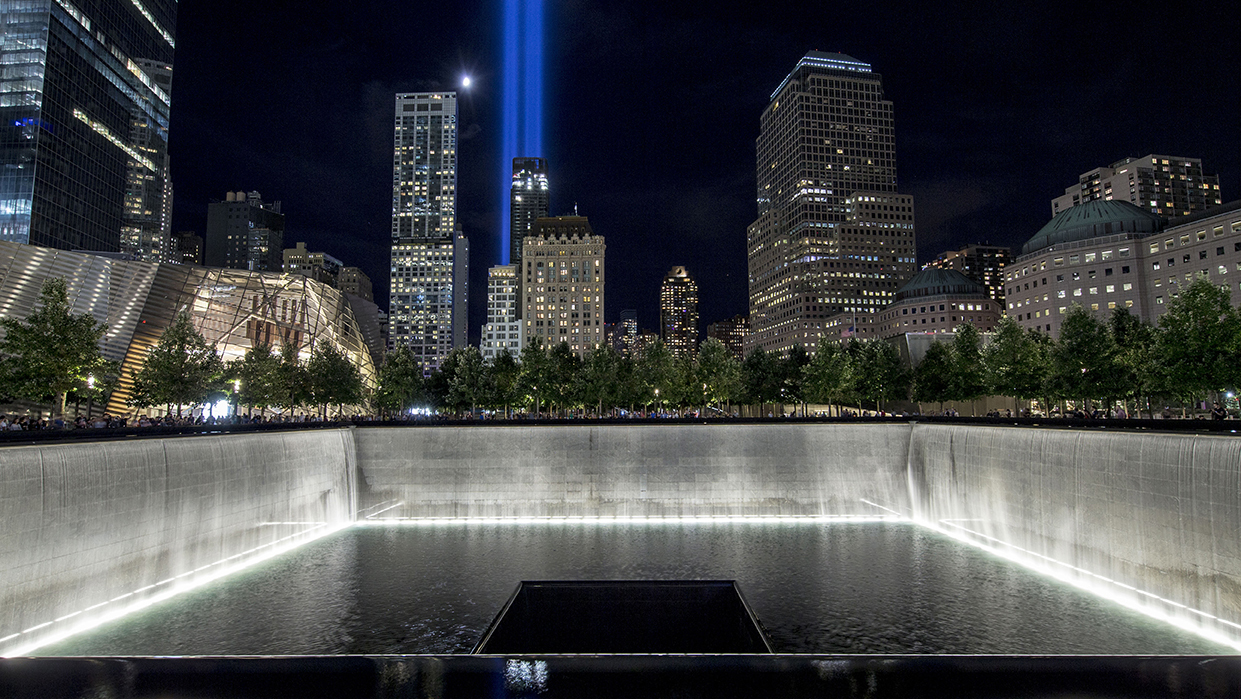
It was a Tuesday when Nine Eleven became a noun. Since then, it has fallen on a Sunday only three times, in 2005, 2011 and this year.

America began as an experiment and as these widely divided times reminds, us we are still in the thick of it. On this 9/11, we gather to share our grief for those who died, to reflect on where we are as a people, and to perhaps better understand that what happened will never go away. We can’t ‘celebrate’ Nine Eleven, but we will remember and honor this important day in our nation’s history.

TMP 09-11 - v.4 FINAL

“The Creative Tension of Justice Making”

Download The Morning Program here or read it without downloading below.

Of his discourse, Mark writes:

Martin Luther King said, “True peace is not nearly the absence of tension, it is the presence of justice.” Creating justice is not a passive enterprise. It requires action, and sometimes it requires direct action that presses creatively on the places of tension within society to provoke positive social change.

ABOUT OUR VISITING MINISTER:

Rev. Dr. Mark Y. A. Davies is the Wimberly Professor of Social and Ecological Ethics, Director of the World House Institute for Social and Ecological Responsibility, and Executive Director of the Leadership. Education, and Development (LEaD) Hub North United States for the General Board of Higher Education and Ministry (GBHEM) at Oklahoma City University where he has worked in both teaching and administration for 25 years. He is an ordained elder in the Oklahoma Conference of the United Methodist Church where he has served as Chair of the Board of Church and Society from 2015 to 2018.

Mark’s Ph.D. is from Boston University in the area of Social Ethics, and he has served Boston University School of Theology (BUSTH) as a member of its Dean’s Advisory Board and as the alumnus representative on BUSTH’s Green Team as part of the Green Seminary Initiative.

Mark has led and implemented a number of initiatives in coordination with the Division of Higher Education of the United Methodist Church including a Methodist Higher Education Global Ethics Initiative from 2008 to 2012, a United Methodist Higher Education Interfaith Initiative from 2015 to present, and a Global Methodist Higher Education Social and Ecological Responsibility Initiative from December 2016 to the present. Mark has published in the areas of Boston personalism, process philosophy and ethics, and ecological ethics.

In 2017, the General Board of Church and Society of the United Methodist Church selected Dr. Davies to serve as the convener of the writing team tasked with revising “The Natural World” section of the Social Principles of the United Methodist Church. This is the first time the Social Principles have undergone a thorough revision since their adoption by the denomination in 1972.

Mark is one of the inaugural members of the New Room Books Editorial Board. New Room Books is a reviewed academic monograph series that offers scholars from the Methodist tradition and their students a way to share their work.

Since 2015, Mark has served on the United Methodist University Senate, which is “an elected body of professionals in higher education created by the General Conference to determine which schools, colleges, universities, and theological schools meet the criteria for listing as institutions affiliated with The United Methodist Church.”

Mark engages in advocacy and activism in the areas of peace, social justice, and ecological sustainability. Locally this is expressed through his work with the Human Community Network, which works to create non-violent systemic change for a just and flourishing human and ecological community through collaboration, education, innovation, and action. See www.humancommunitynetwork.org.

He and his wife Kristin live in Edmond, OK in the United States, and they have two daughters who attend Oklahoma City University.

TMP 09-04 - v.3

Peace Sunday #2 – Living Peace

Peace Sunday #2 – Living Peace

Michelle Haynes & Marla Loturco, leading

Download the Morning Program here or read it below without downloading

This morning we continue with our special series based on the book Great Peacemakers: True Stories from Around the World by Ken Beller and Heather Chase by taking a look at leaders who ‘live peace’:  Martin Luther King, Jr. and Anderson Sá.


TMP 08-28 - v3

Water Communion Sunday –

Download the Morning Program here or read it below without downloading.

Communion Sunday – The Worship Team, leading

In 1980, two Unitarian universalist women, Carolyn McDade and Lucille Shuck Longview, were asked to create a worship experience for the Women and Religion Continental – Convocation of Unitarian Universalist. As they shaped that ceremony McDade and Longview wanted to create a ritual “that spoke to our connectedness to one another, to the totality of life, and to our place on this planet.” they included a new, inclusive symbol of women spirituality: water. They write that the first water communion was for them “a new story of creation,” add that water was their chosen symbol of empowerment.

In the 42 years since its creation, water communion has become an important annual ceremony in many UU congregations across the nation, including our own. With water always the theme and central element, each celebration of water communion is distinctive.  Join the Worship Team as we again commemorate the spiritual and ecological importance of this life-giving element.

Please bring a small container of water with you on Sunday.  If you collected water from travels over the last year, or collected some from a favorite local spot, or if your water is virtual from a location you see in your mind’s eye bring it.

TMP 08-21 - v3

Two Trillion and Counting

Two Trillion and Counting

The Rev. Dr. Mark Y.A. Davies, leading

What impact does the knowledge that there are likely more than 2 trillion galaxies in the universe have on our self-understanding and on our religious vision of ourselves within the cosmos?

DOWNLOAD THE MORNING PROGRAM here or read it without downloading below

Rev. Dr. Mark Y. A. Davies is the Wimberly Professor of Social and Ecological Ethics, Director of the World House Institute for Social and Ecological Responsibility, and Executive Director of the Leadership. Education, and Development (LEaD) Hub North United States for the General Board of Higher Education and Ministry (GBHEM) at Oklahoma City University where he has worked in both teaching and administration for 25 years. He is an ordained elder in the Oklahoma Conference of the United Methodist Church where he has served as Chair of the Board of Church and Society from 2015 to 2018.

Mark’s Ph.D. is from Boston University in the area of Social Ethics, and he has served Boston University School of Theology (BUSTH) as a member of its Dean’s Advisory Board and as the alumnus representative on BUSTH’s Green Team as part of the Green Seminary Initiative.

Mark has led and implemented a number of initiatives in coordination with the Division of Higher Education of the United Methodist Church including a Methodist Higher Education Global Ethics Initiative from 2008 to 2012, a United Methodist Higher Education Interfaith Initiative from 2015 to present, and a Global Methodist Higher Education Social and Ecological Responsibility Initiative from December 2016 to the present. Mark has published in the areas of Boston personalism, process philosophy and ethics, and ecological ethics.

In 2017, the General Board of Church and Society of the United Methodist Church selected Dr. Davies to serve as the convener of the writing team tasked with revising “The Natural World” section of the Social Principles of the United Methodist Church. This is the first time the Social Principles have undergone a thorough revision since their adoption by the denomination in 1972.

Mark is one of the inaugural members of the New Room Books Editorial Board. New Room Books is a reviewed academic monograph series that offers scholars from the Methodist tradition and their students a way to share their work.

Since 2015, Mark has served on the United Methodist University Senate, which is “an elected body of professionals in higher education created by the General Conference to determine which schools, colleges, universities, and theological schools meet the criteria for listing as institutions affiliated with The United Methodist Church.”

Mark engages in advocacy and activism in the areas of peace, social justice, and ecological sustainability. Locally this is expressed through his work with the Human Community Network, which works to create non-violent systemic change for a just and flourishing human and ecological community through collaboration, education, innovation, and action. See www.humancommunitynetwork.org.

He and his wife Kristin live in Edmond, OK in the United States, and they have two daughters who attend Oklahoma City University.

TMP 08-14 - v.3

The Democracy of Beloved Community

The Democracy of Beloved Community

The Rev. Mark Y.A. Davies, leading 

The world deeply needs religious visions that model inclusion, community, and democracy rather than patriarchy, hierarchy, and autocracy – visions that call us to look around and join with others in beloved, just, and participatory communities rather than looking up and bowing down.

DOWNLOAD THE MORNING PROGRAM HERE or read it below without downloading

Rev. Dr. Mark Y. A. Davies is the Wimberly Professor of Social and Ecological Ethics, Director of the World House Institute for Social and Ecological Responsibility, and Executive Director of the Leadership. Education, and Development (LEaD) Hub North United States for the General Board of Higher Education and Ministry (GBHEM) at Oklahoma City University where he has worked in both teaching and administration for 25 years. He is an ordained elder in the Oklahoma Conference of the United Methodist Church where he has served as Chair of the Board of Church and Society from 2015 to 2018.

Mark’s Ph.D. is from Boston University in the area of Social Ethics, and he has served Boston University School of Theology (BUSTH) as a member of its Dean’s Advisory Board and as the alumnus representative on BUSTH’s Green Team as part of the Green Seminary Initiative.

Mark has led and implemented a number of initiatives in coordination with the Division of Higher Education of the United Methodist Church including a Methodist Higher Education Global Ethics Initiative from 2008 to 2012, a United Methodist Higher Education Interfaith Initiative from 2015 to present, and a Global Methodist Higher Education Social and Ecological Responsibility Initiative from December 2016 to the present. Mark has published in the areas of Boston personalism, process philosophy and ethics, and ecological ethics.

In 2017, the General Board of Church and Society of the United Methodist Church selected Dr. Davies to serve as the convener of the writing team tasked with revising “The Natural World” section of the Social Principles of the United Methodist Church. This is the first time the Social Principles have undergone a thorough revision since their adoption by the denomination in 1972.

Mark is one of the inaugural members of the New Room Books Editorial Board. New Room Books is a reviewed academic monograph series that offers scholars from the Methodist tradition and their students a way to share their work.

Since 2015, Mark has served on the United Methodist University Senate, which is “an elected body of professionals in higher education created by the General Conference to determine which schools, colleges, universities, and theological schools meet the criteria for listing as institutions affiliated with The United Methodist Church.”

Mark engages in advocacy and activism in the areas of peace, social justice, and ecological sustainability. Locally this is expressed through his work with the Human Community Network, which works to create non-violent systemic change for a just and flourishing human and ecological community through collaboration, education, innovation, and action. See www.humancommunitynetwork.org.

He and his wife Kristin live in Edmond, OK in the United States, and they have two daughters who attend Oklahoma City University.

TMP 08-07 - v.4

Peace Sunday #1 – Choosing Nonviolence

Peace Sunday #1 – Choosing Nonviolence

Marla Loturco, leading

Download the morning program here or read it below without downloading.

This morning we kick off a special series based on the book Great Peacemakers: True Stories from Around the World by Ken Beller and Heather Chase. This Sunday, we take a look at Henry David Thoreau and Mahatma Gandhi, to see what we might learn from their wisdom.

Following the Morning Assembly today:

5th Sunday Potluck Lunch

The Entire Congregation

Our last 5th All-Church Sunday potluck feels like to was centuries ago, but at long last it returns this month.

Everyone one is invited – friends, visitors, lapse worshippers, faithful followers and first-time guests, who get to eat without having to bring a dish to share. There is no food ‘theme’ for this summer event.  You get to bring whatever food dish (to serve 6-8) you wish to bring.